Keynote Speakers

Jeff Dean
Tuesday, August 11th | 08:00 AM – 09:20 AM
Title: Important Trends in AI: How Did We Get Here, What Can We Do Now, and What Will Be Important In the Future?
Abstract: In this talk I’ll highlight some of the major developments in artificial intelligence over the past 15 years, which serve as key ingredients in today’s most advanced AI models. This will touch on development of new model architectures, advances in large-scale distributed training, ML accelerators like TPUs, and development of algorithms to improve training and serving efficiency. I’ll discuss the Gemini effort at Google, both in terms of the capabilities of Gemini models but also in how we go about organizing a large-scale research and engineering effort like Gemini. Finally, I’ll give a sense of the capabilities of today’s models, and also highlight some areas that will advance rapidly in the next few years.
Bio: Jeff Dean (Jeffrey Dean) joined Google in 1999 and is currently Google’s Chief Scientist, focusing on AI advances for Google DeepMind and Google Research. His areas of focus include machine learning and AI, and applications of AI to problems that help billions of people in societally beneficial ways. He has co-designed/implemented many generations of Google’s crawling, indexing, and query serving systems, and co-designed/implemented major pieces of Google’s initial advertising and AdSense for Content systems. He is also a co-designer and co-implementor of Google’s distributed computing infrastructure, including the MapReduce, BigTable and Spanner systems, protocol buffers, the open-source TensorFlow system for machine learning, and a variety of internal and external libraries and developer tools.
Jeff received a Ph.D. in Computer Science from the University of Washington in 1996, working with Craig Chambers on whole-program optimization techniques for object-oriented languages. He received a B.S. in computer science & economics from the University of Minnesota in 1990. He is a member of the National Academy of Engineering, and of the American Academy of Arts and Sciences, a Fellow of the Association for Computing Machinery (ACM), a Fellow of the American Association for the Advancement of Sciences (AAAS), and a winner of the 2012 ACM Prize in Computing.
Jingren Zhou
Wednesday, August 12th, 08:00 AM – 09:30 AM
Title: The Agentic Data Stack: How LLMs Enable Data Engineering and Orchestration
Abstract: The rapid advancement of large language models (LLMs) and the emergence of AI agents are reshaping the landscape of data systems and analytics. Tasks that once required specialized pipelines and extensive manual engineering can now be expressed and automated through natural language and agentic workflows. In this talk, I will explore how LLMs are transforming core data manipulation tasks, including data transformation, schema discovery, text-to-SQL, and feature engineering, reducing months of task-specific data engineering effort to prompt-driven specifications. I will then discuss the growing challenge of preprocessing massive multimodal datasets for foundation model training and how combining LLMs with database techniques enables efficient, flexible, and semantically rich data processing pipelines. Finally, as workflows become increasingly complex, LLMs are being orchestrated through agent frameworks that integrate context, memory, tools, and verification mechanisms to support long-horizon reasoning and execution. I will present AgentScope, a robust agent framework, and show how it enables data agents to autonomously perform data collection, curation, querying, and analytics in support of business intelligence and decision-making.
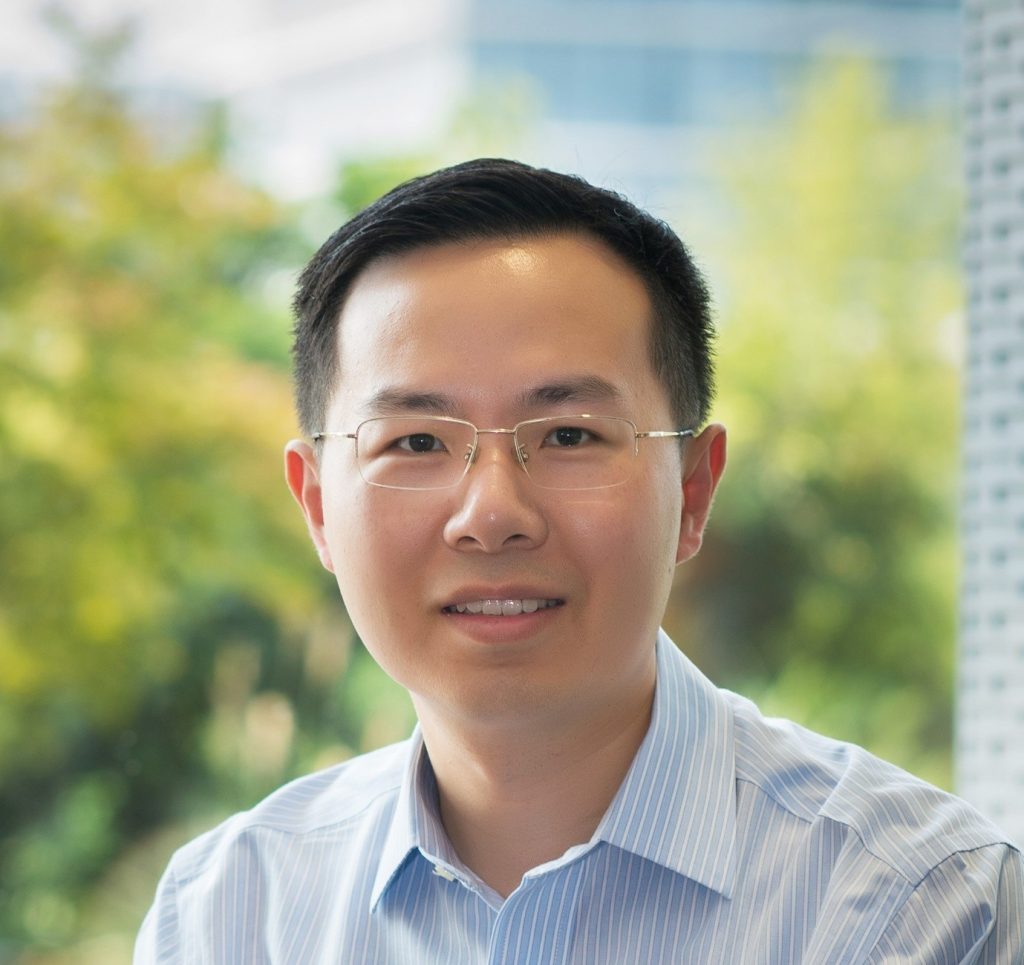
Bio: Jingren Zhou is Senior Vice President and Chief AI Architect at Alibaba, where he founded Alibaba’s flagship AI foundation models, including the Qwen and Wan model series. Today, Qwen is recognized as one of the world’s leading large language models and among the most widely adopted open-source AI models globally. He currently leads the development of foundation models such as Qwen and Wan, as well as their applications across a broad range of Alibaba’s business operations. Previously, Jingren served as Chief Technology Officer at Alibaba Cloud, where he led technology innovation and product development across a broad portfolio of cloud computing services. He also played a key role in developing advanced AI technologies and infrastructure for personalized search, product recommendations, and advertising on Alibaba’s e-commerce platforms. Before joining Alibaba, he was a veteran at Microsoft, focusing on big data and database research and development. His research interests include cloud computing, distributed systems, databases, and large-scale machine learning. He has served as PC co-chair and core committee member for many academic conferences and technical forums. He received his PhD in Computer Science from Columbia University. He is a Fellow of ACM and IEEE.

Regina Barzilay
Thursday, August 13th, 08:00 AM – 09:30 AM
Title: Rethinking disease diagnosis and treatment with AI
Abstract: Until very recently, AI had limited impact on the science and practice of modern medicine. With new advancements in machine learning, this situation is starting to change. In my talk, I will give a few successful examples ranging from molecular and cell modeling to image analysis, where AI tools brought about novel insights into human biology and facilitated the discovery of new therapeutic interventions. In the second part of the talk, I want to focus on problems where current AI methods fail to deliver as expected, motivating the need for algorithmic innovations.
Bio: Regina Barzilay is a School of Engineering Distinguished Professor of AI & Health in the Department of Computer Science and the AI Faculty Lead at MIT Jameel Clinic. She was recently named on Time100 Most Influential People in AI 2025 and develops machine learning methods for drug discovery and clinical AI. In the past, she worked on natural language processing. Her research has been recognized with the MacArthur Fellowship, an NSF Career Award, the AAAI Squirrel AI Award for Artificial Intelligence for the Benefit of Humanity, and the IEEE Frances E. Allen Medal for innovative machine learning algorithms that have led to advances in human language technology and demonstrated impact on the field of medicine. Regina is a member of the National Academy of Engineering, National Academy of Medicine, and the American Academy of Arts and Sciences.